Skip to content
Demos Lab
  • p5.js
  • TouchDesigner
  • Generative Art
  • Installations
  • Physical Computing
  • Tools
  • Media Art
  • About

Generative Art and Shaders: Making Images With Code

This hub collects Demos Lab's guides to making art with code, from the algorithms and noise functions behind organic patterns to GLSL shaders that render in real time on the GPU. It is for creative coders, designers and artists who want to understand how generative systems work and then build their own.

What you'll find here

Algorithms and noise

These guides explain the building blocks of generative work, including Perlin and simplex noise, flow fields, recursion, L-systems and seeded randomness you can reproduce.

GLSL shader techniques

Fragment shader walkthroughs cover signed distance functions, raymarching, domain warping and the math that turns a pixel coordinate into a moving image.

Plotter and physical output

Practical advice covers turning code into pen plotter drawings, from exporting clean SVG paths and optimizing line order to choosing paper and pens that hold up.

Generative design and AI tools

These pieces look at how parametric systems and creative AI tools fit into an artist's workflow, with clear takes on where they help and where hand-written code still does the job better.

Home » Generative Art & Shaders
Normal Vector on a Surface
November 15, 2026 by Demos Lab Editorial Team
Generative Art & Shaders

How to Find the Normal Vector of a Surface for Shading

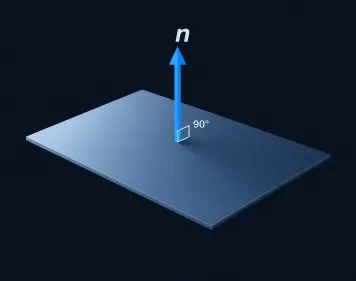
For the plane x + 2y + 2z = 5, the normal vector is (1, 2, 2). The coefficients are the answer. Most other…

Read article →
Anisotropic Filtering Hero
November 13, 2026 by Demos Lab Editorial Team
Generative Art & Shaders

Anisotropic Filtering Meaning and How It Works

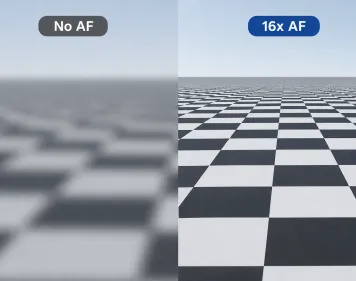
On a floor seen at a low angle, one screen pixel can cover a strip of texture many times longer than it is wide.…

Read article →
Normal Map Hero
November 12, 2026 by Demos Lab Editorial Team
Generative Art & Shaders

Normal Map Value Range and Color Encoding Explained

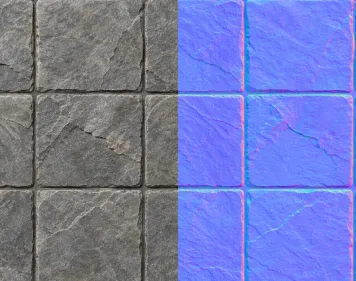
A flat tangent-space normal is conventionally stored as roughly 128, 128, 255, which is a handy example of the encoding. Each normal is a…

Read article →
Post Processing in Games Hero
November 12, 2026 by Demos Lab Editorial Team
Generative Art & Shaders

What Is Post Processing in Games and Real Time Art

The frame on your monitor has already been rendered once by the time you see it. After the 3D scene is drawn into a…

Read article →
Depth Testing Hero
November 9, 2026 by Demos Lab Editorial Team
Generative Art & Shaders

Depth Testing in the Graphics Pipeline Explained

A fresh WebGL context draws in painter’s order: the last thing you draw lands on top, because depth testing stays off until you call…

Read article →
Anti-Aliasing Hero
October 25, 2026 by Demos Lab Editorial Team
Generative Art & Shaders

Antialiasing Techniques Explained for Real Time Graphics

Anti-aliasing smooths the jagged, stair-stepped edges and shimmering patterns that appear when smooth shapes are squeezed onto a grid of square pixels. Every method…

Read article →
Perlin Noise Hero
October 21, 2026 by Demos Lab Editorial Team
Generative Art & Shaders

Perlin noise explained for creative coders

Perlin noise is a way to make randomness that changes smoothly. Nearby inputs give nearby outputs, so you get rolling hills, drifting smoke and…

Read article →
Latest experiments

  • Jumper Wires Hero
    How to Choose the Right Jumper Wires for Arduino Projects
  • New Media Art Hero
    New Media Art Examples and Landmark Media Artworks
  • Anisotropic Filtering Hero
    Anisotropic Filtering and Why Your Textures Look Blurry
  • Time Slices in TouchDesigner Explained for CHOP Beginners
  • Snake Game JavaScript Hero
    How to Code a Snake Game in JavaScript from Scratch

Sections

  • Creative Coding Tools (3)
  • Generative Art & Shaders (7)
  • Installations & Projection (2)
  • New Media Art (4)
  • p5.js & Processing (5)
  • Physical Computing (4)
  • TouchDesigner (3)

Demos Lab

Creative coding and interactive media art

Sections

  • Creative Coding Tools
  • Generative Art & Shaders
  • Installations & Projection
  • New Media Art
  • p5.js & Processing
  • Physical Computing
  • TouchDesigner

Latest

  • How to Choose the Right Jumper Wires for Arduino Projects
  • New Media Art Examples and Landmark Media Artworks
  • Anisotropic Filtering and Why Your Textures Look Blurry
  • Time Slices in TouchDesigner Explained for CHOP Beginners
  • How to Code a Snake Game in JavaScript from Scratch

© 2026 Demos Lab.
  • About
  • Contact
  • Code & Credits
  • Privacy Policy
  • Terms of Use
×